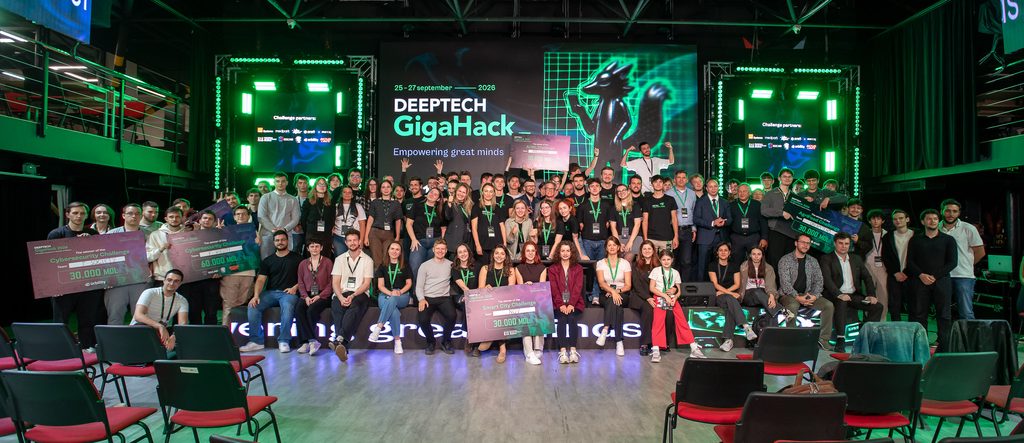
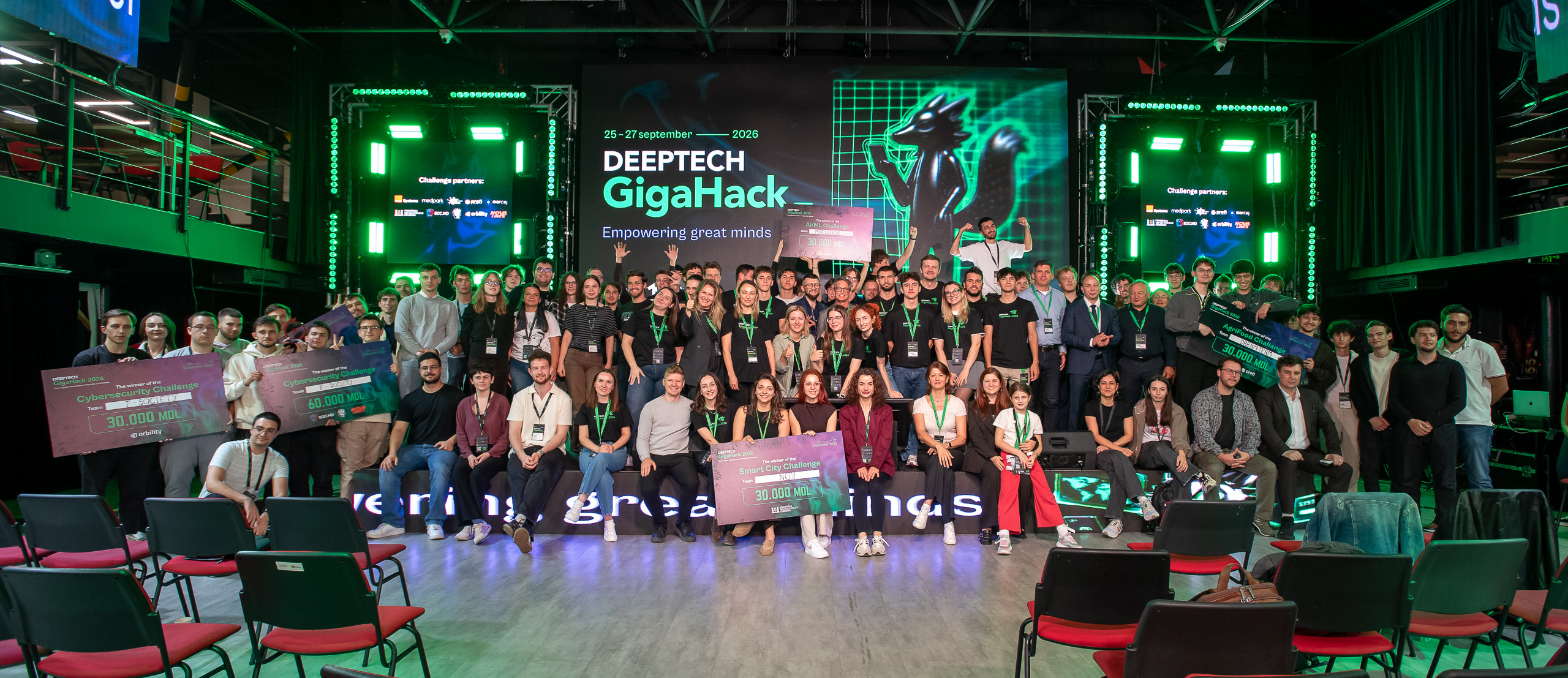
Solutions that use artificial intelligence to identify potential customers, technologies that reduce the time needed for plantation inspections, a digital assistant for citizens’ interaction with City Hall, a tool that simplifies medical documentation, and a new recyclable packaging concept are among the seven award-winning projects at Deeptech GigaHack 2026.
Over 48 hours, 12 teams turned problem scenarios into prototypes and technological solutions for seven challenges in fields such as artificial intelligence and machine learning, HealthTech, Cybersecurity, AgriFood, Smart City and GeoTech, as well as an Open Challenge, in which participants could develop their own ideas.
In total, this year’s edition brought together over 400 participants, mentors, jury members, organizers and partners, including specialists from Romania, Georgia, Armenia and Bosnia and Herzegovina, and totaled approximately 209 hours of mentoring.
The award ceremony was attended by officials, representatives of partner companies, and representatives of external partners who support the development of the industry at the national level.
Dominique Waag, Ambassador of France to the Republic of Moldova: “These days were about innovation, creativity and cooperation, but above all about the courage to test new ideas and build together. I encourage you to keep going, to trust your ideas, to stay curious and to keep creating. What I see here shows me that the Republic of Moldova is increasingly becoming a place where innovation takes shape, and that is impressive.”
Stella Jemna, Country Representative of the Ukraine-Moldova American Enterprise Fund (UMAEF): “A hackathon doesn’t end with the award ceremony. Its true value appears when an idea tested here continues to be developed, reaches users, and turns into a product or a business. We want the teams to use this experience, the mentors and the ecosystem’s resources to take the next step and build projects from here that can grow.”
Cristian Cerneanu, Startup Ecosystem Manager at Innovate Moldova: “We saw very good ideas and, from one edition to the next, we see a clear increase in the quality of the solutions developed. Some of the projects presented here have real potential to go further. I encourage participants not to stop at the prototype built in these days, but to use the resources, programs and connections available in the ecosystem to turn their ideas into products and companies.”
At the same time, Technovator, the organizer of the competition, announced the launch of a program dedicated to the selected teams, which will offer them support, mentoring and resources to further develop their solutions and to turn the prototypes created during the competition into tested and validated products.
Solutions Developed in 48 Hours: Artificial Intelligence for Sales Growth, Digital Agriculture
The challenges of the 2026 edition of Deeptech GigaHack started from concrete problems of companies and institutions, and the teams had 48 hours to find a solution, test it, and demonstrate that it can work in practice.
LeadRadar: Artificial Intelligence That Identifies Business Opportunities in Public Information
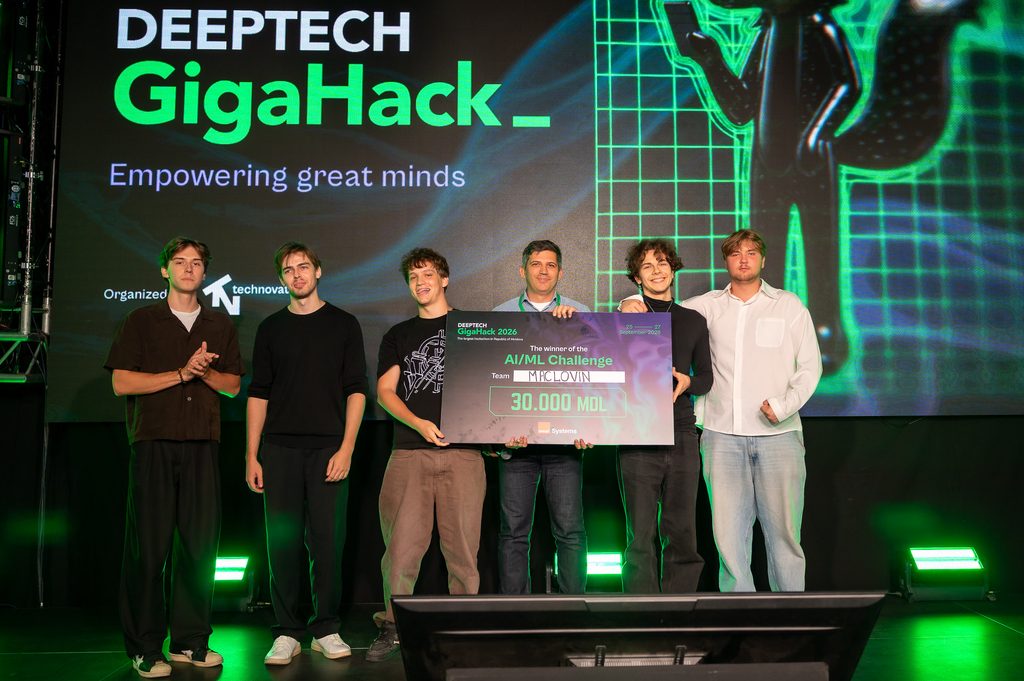
Team MacLovin developed a tool for sales teams. LeadRadar is a solution that can turn the huge amount of public information about companies into a clear list of potential customers, replacing hours of manual searching by an employee. It also provides recommendations with the sources from which the information was accessed, so it can be verified independently. After identifying a potential customer, LeadRadar can propose a personalized email or LinkedIn message based on the information found about the company. The user can then subscribe to updates to find out when new relevant information appears, and the data can be integrated into a CRM system.
Bloomsense: Drones and Artificial Intelligence for Faster Plantation Inspections
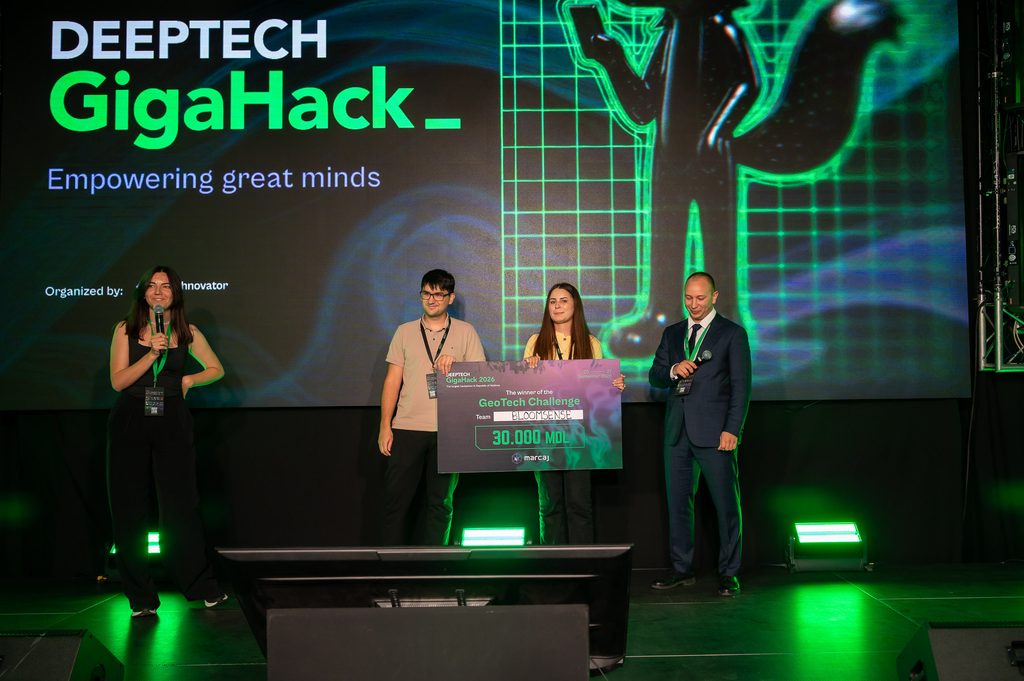
Bloomsense developed a solution in which drone images are automatically turned into a map of the problems that need to be checked in a plantation. The technology analyzes the images and can identify the rows of vines and the gaps between plants that require intervention. Instead of the inspector or farmer walking the entire area to look for problems, the system shows exactly where to go and what the optimal route is. During the hackathon, the solution automatically processed 311 images in about seven minutes, analyzing 53 blocks and 792 rows, the equivalent of over 50 kilometers of plantations. According to the results presented by the team, using the system could reduce the time needed for a field inspection by about 72%. To make the technology accessible to farmers who don’t want to use a complex platform, the team also created a Telegram bot: the user enters the plantation, and the system sends them the map, the route and the points to check.
FOLDBACK: A Package That Folds After Use and Can Return to the Recycling Loop
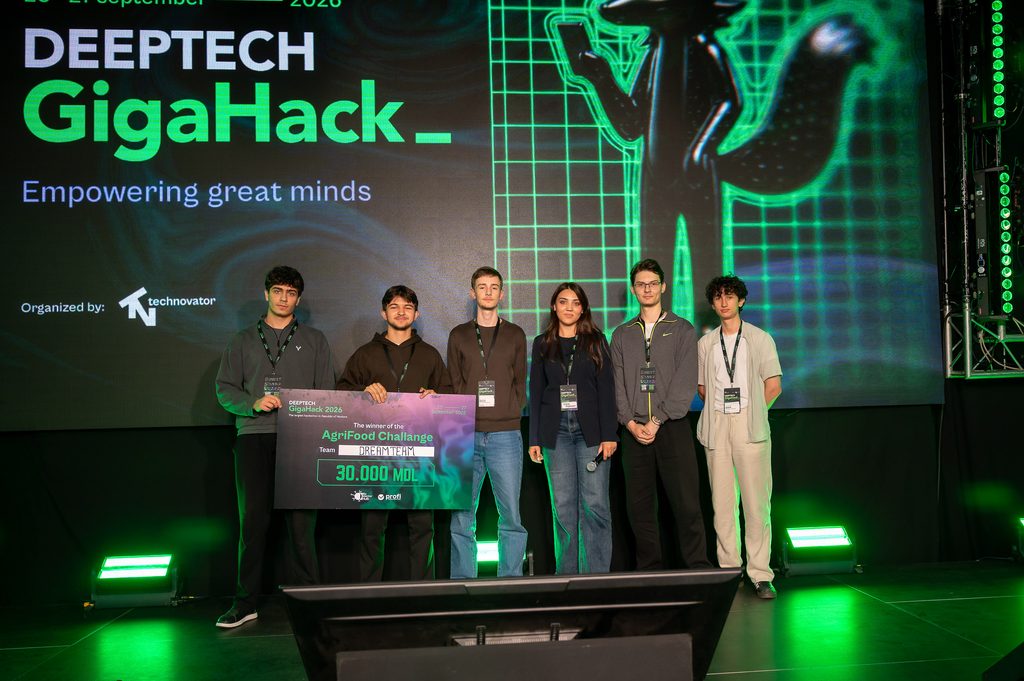
DreamTeam tackled a seemingly simple but difficult problem from a recycling standpoint: what happens to the plastic packaging in which retailers sell freshly prepared food? The solution, called FOLDBACK, starts from rotisserie chicken packaging, a product that is hard to package in alternative ways because of temperature and grease. The team proposed a polypropylene container that, once the food has been eaten, can be folded into a compact cylinder and returned through the already existing infrastructure in EU stores designed to collect plastic packaging. This way, the container would no longer end up mixed with other plastic waste, but could form a separate stream of recyclable material. DreamTeam’s stated goal is to reduce the amount of plastic used per portion by about 50%.
FIR: A Single Point of Contact Between the Citizen’s Question and City Hall
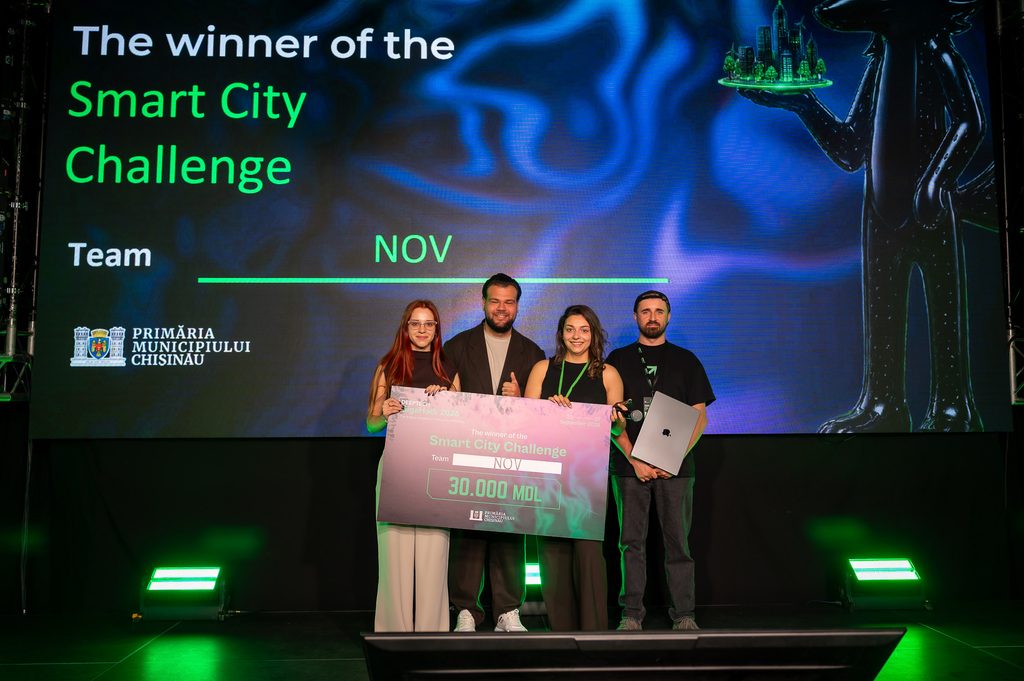
NOV Team created FIR (Find, Inform, Resolve) – “Fiecare Întrebare Rezolvată” (“Every Question Resolved”), a digital assistant that simplifies citizens’ interaction with the municipal administration. The system looks for answers exclusively in official sources and indicates the exact document and passage the information comes from; if the information is missing, it directs the user to the responsible institution. The prototype, available in Romanian and Russian, was built on 266 citizen questions and 110 types of problems. For petitions, the solution can identify the responsible department, integrate the legal deadline, and allow tracking of the request’s path through the municipal administration. The solution was designed for a system that includes municipal departments, five sectors, 18 suburban city halls and hundreds of subordinate institutions.
Notavra: Less Bureaucracy for Doctors, More Time for Patients
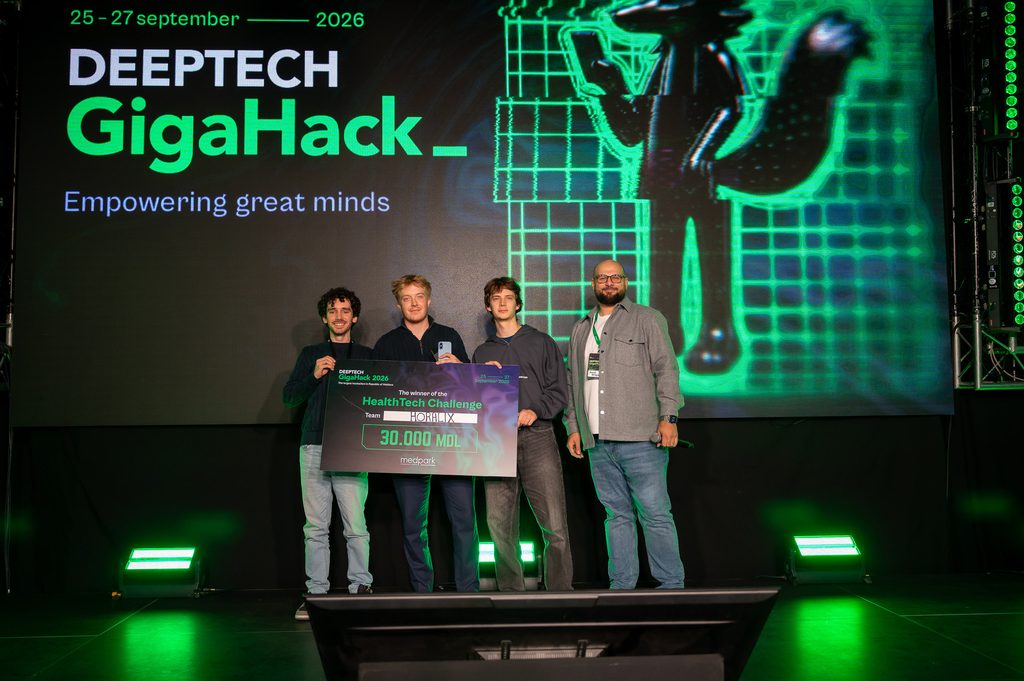
Team Horalix, from Bosnia and Herzegovina, started from a problem doctors face daily: a significant part of their time is spent not talking to the patient, but transcribing information and filling out documentation. Their solution, Notavra, can automatically transcribe medical conversations and, more importantly, understand what was decided during the discussion: what the next actions are, who is responsible, and what needs to be done afterward. One of the challenges the team solved is the difference between what was merely proposed and what was actually decided. If a certain date for a procedure is suggested during a discussion and another proposal appears later, the system keeps the context and tries to distinguish between the options and the final decision. Another important element is confidentiality: processing can take place locally, without sending medical data to the cloud. In the demonstration presented at the hackathon, an 11-minute-and-42-second recording was processed in 6.2 seconds, even with the conversation switching from one language to another.
VOX: Affordable Sensors That Can “Hear” and Locate a Drone
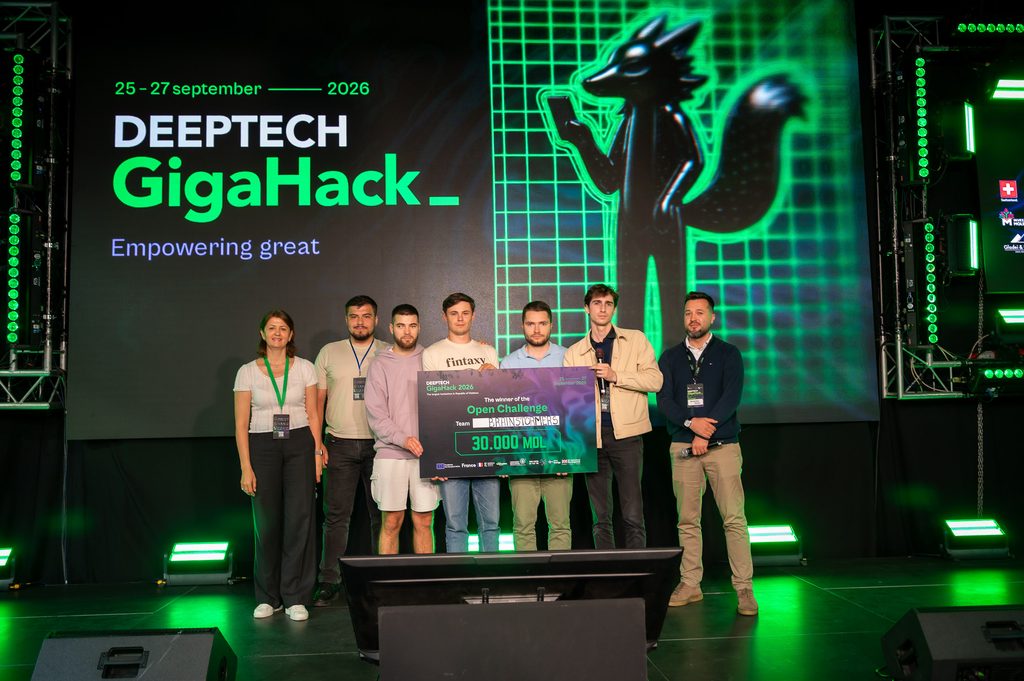
Brainstormers came up with VOX, a solution that turns affordable acoustic sensors into an early warning system for detecting drones. The idea starts from sound: the sensors “listen” to the environment, identify the acoustic signature of a drone, and try to determine its position and trajectory. The system can then warn the person in the risk area and tell them the distance to the drone and the estimated time until it approaches. The solution was designed to work with simple infrastructure: a single server, no cloud, and no expensive specialized equipment. The project thus explores the possibility of building a warning system that can be deployed more easily and at lower cost than existing complex solutions.
Cybersecurity: Critical Infrastructure Tested in a Scenario Close to a Real Attack
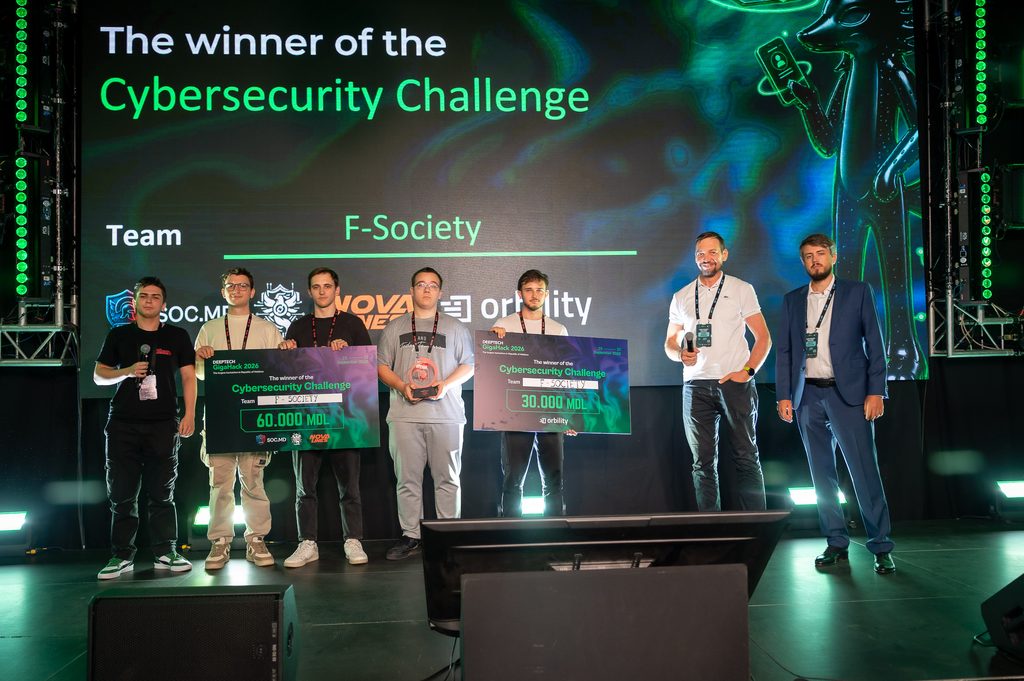
The cybersecurity challenge was built differently from the others. Instead of developing a classic product, participants took part in a Red Team vs. Blue Team exercise, designed to simulate attacks on critical infrastructure. The Red Teams tried to discover and exploit vulnerabilities in the infrastructure provided in the Cyber Range, while the Blue Team specialists were responsible for detecting and countering the attacks. Among the participating teams was F-Society, which documented the actions carried out against the infrastructure and the vulnerabilities identified. The challenge aimed not only at identifying breaches, but also at testing participants’ ability to work in a scenario close to the real situations faced by cybersecurity specialists.
For some of the projects created at Deeptech GigaHack, the competition is only the first step. The organizers announced that 15 teams will continue to receive mentoring and support to develop and test their solutions and to get in touch with potential partners. Other teams will have access to programs that can help them turn the prototypes developed at the hackathon into viable products.
Deeptech GigaHack 2026 is organized by Technovator, with the support of EU4Innovation East, a regional project funded by the European Union, co-funded by the Government of France and implemented by Expertise France; the Ukraine-Moldova American Enterprise Fund (UMAEF); the Innovate Moldova Program, funded by Sweden and the United Kingdom; and the Central European Initiative (CEI), through the CEI Know-how Exchange Programme 2025, funded by the Ministry of Foreign Affairs and International Cooperation of the Italian Republic.