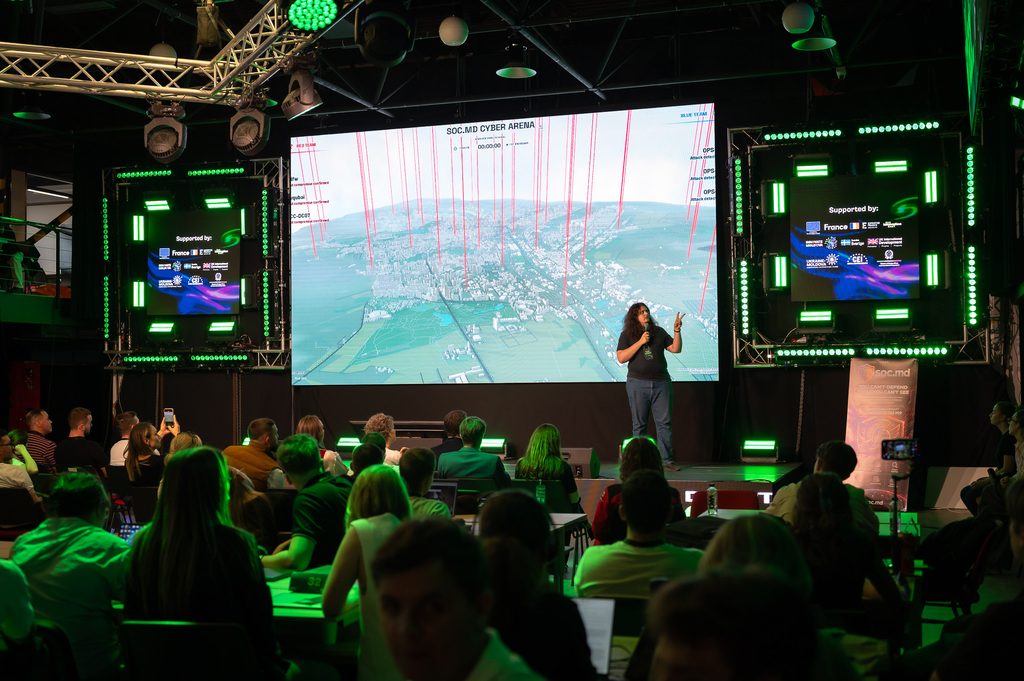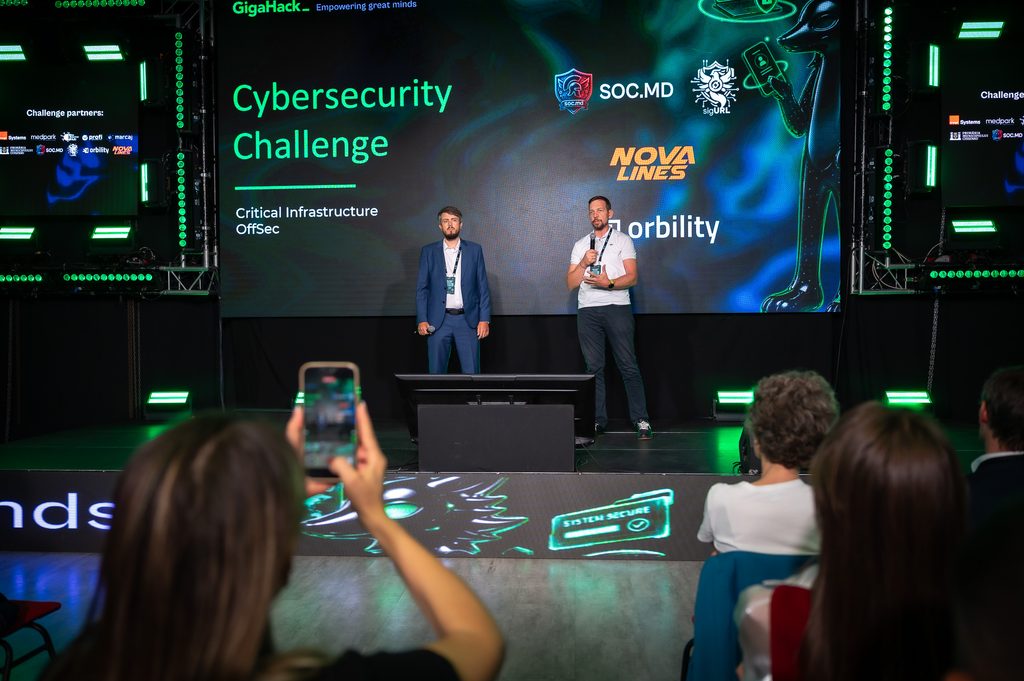
For the first time, at the fourth edition of Deeptech GigaHack, a challenge dedicated to critical infrastructure security took place, aiming to test, in a controlled environment, participants’ ability to identify vulnerabilities, exploit systems, and defend infrastructure against attacks. Cybersecurity – Critical Infrastructure OffSec, facilitated by SOC.md and Orbility, was built in a Red Team vs. Blue Team format and took place in a Cyber Range developed by the SOC.md team.
The Red Teams were tasked with identifying vulnerabilities, compromising systems, and advancing through the simulated infrastructure. On the other side, the Blue Team was responsible for defending the systems, monitoring activity, and regaining control of compromised components. As a result, participants did not only work on identifying vulnerabilities, but also had to react constantly to the other team’s actions and adapt their strategies.
For the Red Teams, the challenge included several types of cybersecurity tasks, from cryptography, web application exploitation, and reverse engineering, to identifying and exploiting vulnerabilities in the simulated infrastructure. The teams had to discover new access points, advance through multiple levels, and reach the objectives set in the Cyber Range.
The scenario was built to bring the competition closer to the situations and processes encountered in real-world cybersecurity. The infrastructure included multiple systems and objectives, and participants had to analyze the environment, identify vulnerabilities, make quick decisions, and adjust their actions based on how the attack and defense evolved.
Over the course of the 48 hours, the Red Teams gained access to multiple systems and endpoints and tried to extend their control over the infrastructure. At the same time, the Blue Team monitored activity in the Cyber Range and intervened to detect attacks, remove attackers’ access, and recover control of compromised systems. For monitoring, the defense team also used signals generated in the infrastructure and tracked through the SIEM system, which made it possible to identify the Red Teams’ activity.
An important element of the challenge was that the situation in the infrastructure could change at any moment. Several systems passed from one team’s control to another’s during the competition. In addition, the Red Teams did not compete only against the Blue Team: one team could try to eliminate another Red Team from a system it controlled, which added an extra layer of strategy to the competition.
During the challenge, participants had to work as a team, divide roles, coordinate their actions, document what they were doing, and make quick decisions in a constantly changing environment. The competition thus tested both technical skills and the teams’ ability to collaborate and react in a complex attack and defense scenario.
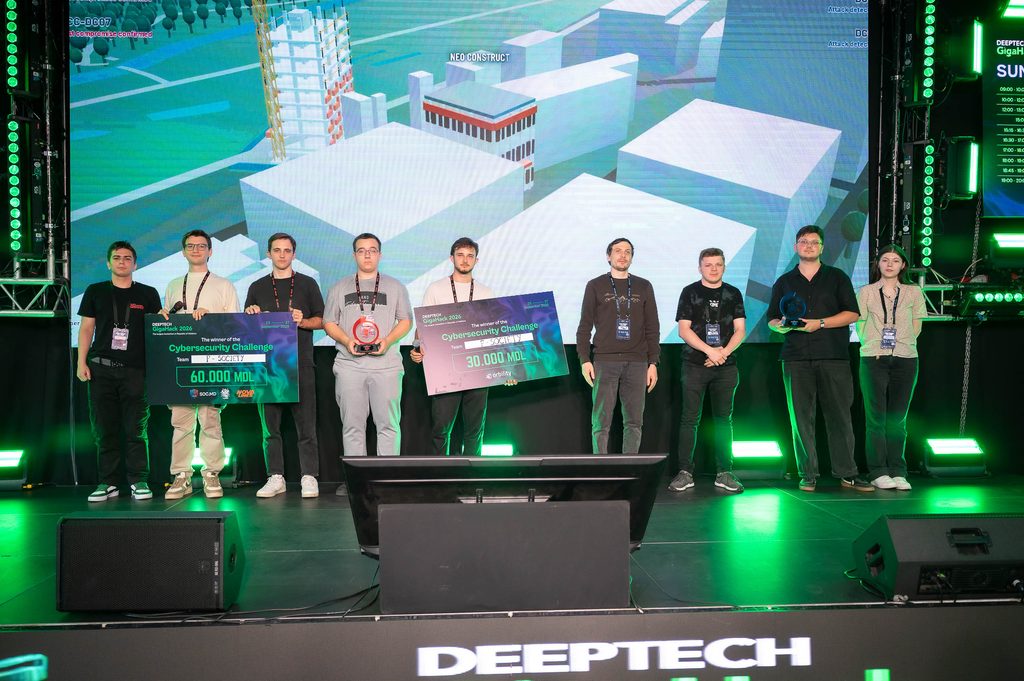
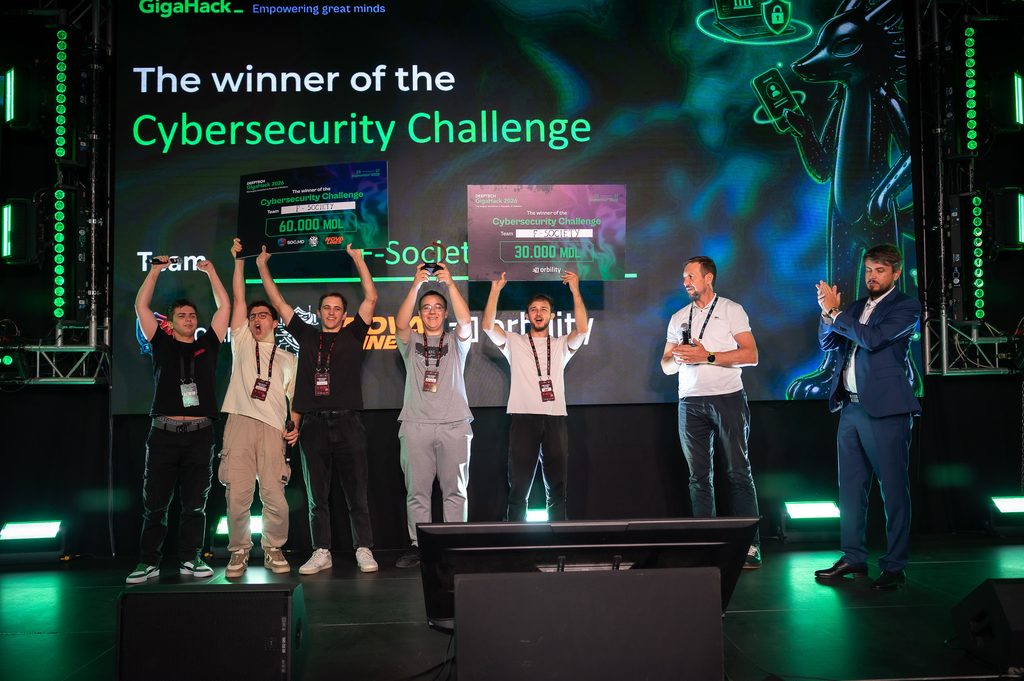
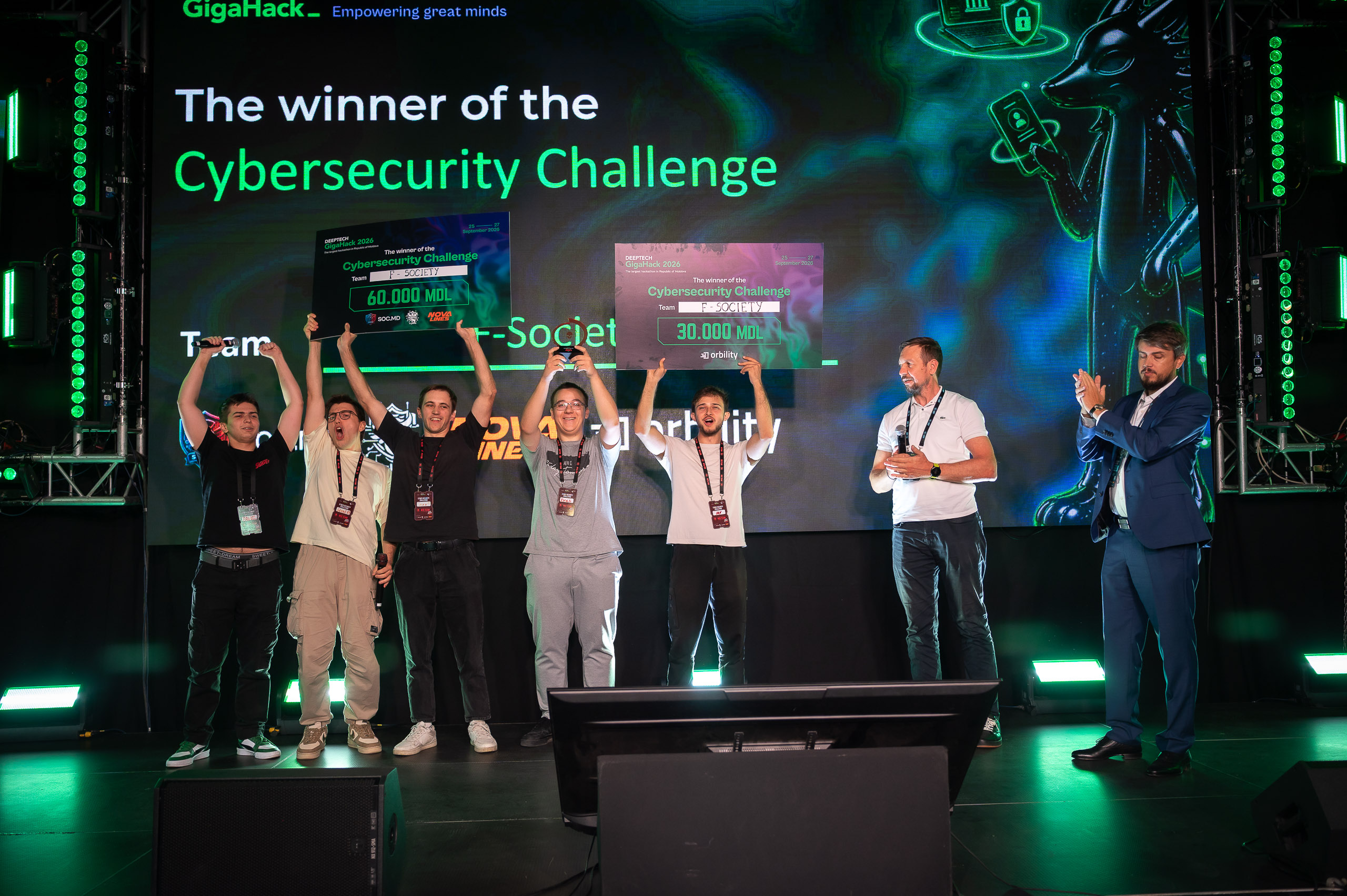
The stakes of the challenge were backed by a total prize fund of 90,000 lei: 60,000 lei provided by SOC.md, sigURL, NovaLines and 30,000 lei by Orbility.
After 48 hours of competition in the Cyber Range, F-Society was named the winner of Cybersecurity – Critical Infrastructure OffSec. At the end, the Red Teams presented their strategies, findings, and results achieved during the competition.
For Deeptech GigaHack 2026, this challenge brought a new dimension to the competition: participants were able to test, in a controlled environment, how attacks on infrastructure can be identified, exploited, and countered. The format also created a space in which young specialists and cybersecurity enthusiasts could work with scenarios and tools similar to those used in real cybersecurity operations.
For some of the projects developed at Deeptech GigaHack, the competition is only the first step: 15 teams will continue to receive mentoring and support to develop and test their solutions and to get in touch with potential partners. Other teams will have access to programs that can help them turn the prototypes developed at Deeptech GigaHack into viable products.
Deeptech GigaHack 2026 was organized by Technovator, with the support of EU4Innovation East, a regional project funded by the European Union, co-funded by the Government of France and implemented by Expertise France; the Ukraine-Moldova American Enterprise Fund (UMAEF); the Innovate Moldova Program, funded by Sweden and the United Kingdom; and the Central European Initiative (CEI), through the CEI Know-how Exchange Programme 2025, funded by the Ministry of Foreign Affairs and International Cooperation of the Italian Republic.